
WUB Organizes SDG 15 Seminar on “Life on Land: Student Responsibilities”
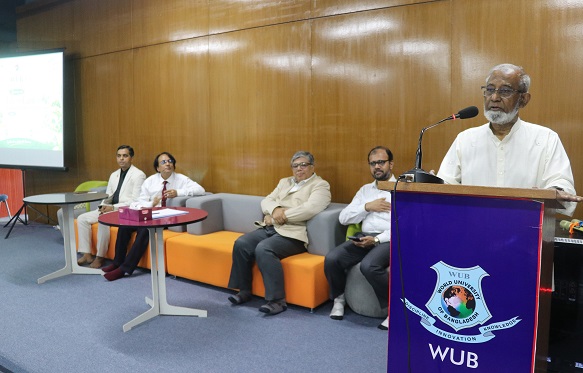
The Department of Textile Engineering and Fashion
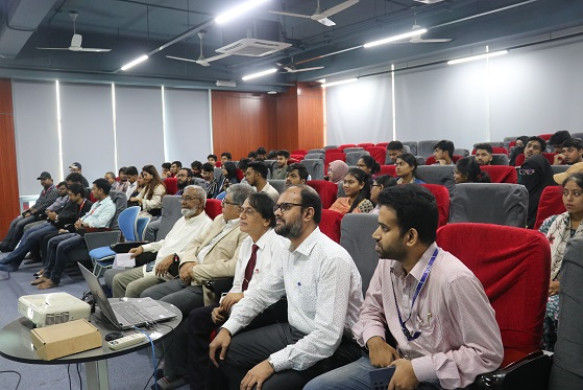
Design at World University of Bangladesh (WUB) organized a seminar titled “Life on Land: Student Responsibilities”
at the Founding Treasurer Morsheda Choudhury Auditorium on October 10, 2026. Organized under the
WUB Environmental Education Cell as part of the University’s SDG 15 Project 3, the seminar was held
under the theme “Small Actions, Big
Impact: Learn, Lead, Act for a Greener Tomorrow.”
The seminar
aimed to raise awareness among students about the importance of protecting
terrestrial ecosystems, conserving biodiversity, and promoting environmental
sustainability. The initiative reflects WUB’s continued commitment to
integrating the United Nations Sustainable Development Goals (SDGs) into
academic activities and encouraging students to become responsible contributors
to a greener future.
Professor
Nurul Islam, Pro Vice-Chancellor of WUB, attended the seminar as the Chief
Guest. In his remarks, he emphasized the importance of interdisciplinary
inquiry and encouraged students to engage in research addressing pressing
environmental challenges through scientific and technological innovation.
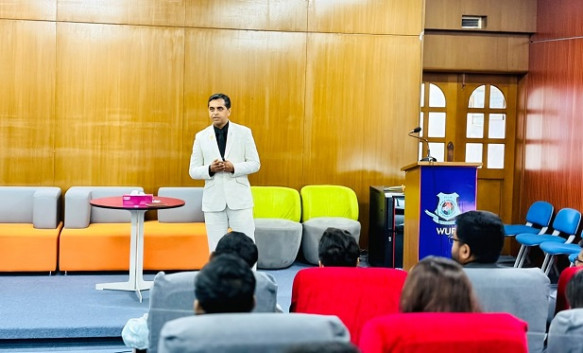
Khandaker
Mohammad Zaman Hossain, Executive Director of Golden Frog, delivered the keynote
address, highlighting the role of students in environmental protection. He
emphasized how small, everyday actions can contribute to biodiversity
conservation and the development of a more sustainable society.
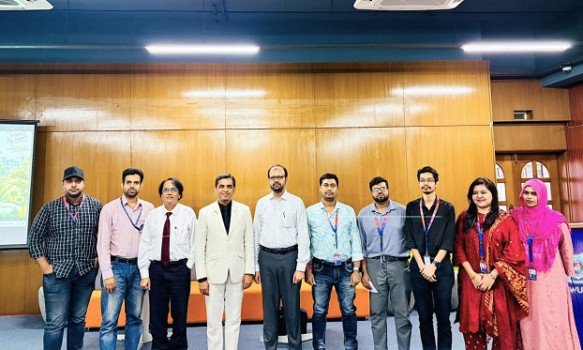
Professor Dr.
A.Q.M. Shafiul Azam, Dean of Academic Affairs and Research, attended as a Special
Guest, while Dr. Ruhul Amin Khan, Director of the Bangladesh
Atomic Energy Commission, was also present as a Guest.
The programme
was presided over by Md. Mostafizur Rahman, Associate Professor and
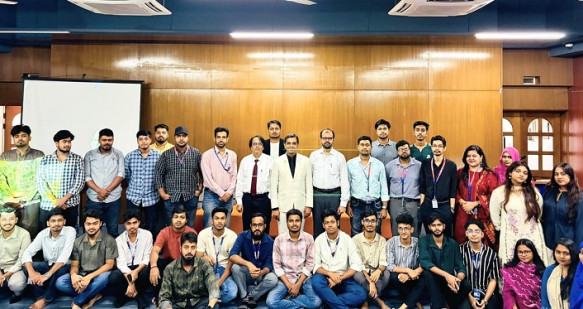
Head of the Department of Textile Engineering and Fashion Design. Faculty
members, staff, and students of the department participated in the seminar,
contributing to discussions on environmental responsibility and sustainable
practices.
The seminar
concluded with a shared commitment to the programme’s message, “Together for
a Sustainable Tomorrow,” reinforcing the importance of
individual responsibility and collective action in protecting the planet’s terrestrial
ecosystems and biodiversity. The initiative also highlighted the relevance of SDG 15: Life
on Land, which calls for the protection, restoration, and
sustainable use of terrestrial ecosystems.
10 October, 2026